The TikTok landscape in 2026 has evolved far beyond dance challenges and viral sounds. With TikTok Shop dominating social commerce and the algorithm shifting toward “high-intent” signals, relying solely on native TikTok analytics is similar to navigating a high-speed system with outdated data.
Native tools give you the what (views, likes), but they fail to explain the why or the how much. They offer a limited 60-day window, zero competitor transparency, and limited visibility into accurate TikTok Shop sales attribution. To scale in 2026, you need third-party intelligence that bridges the gap between viral content and actual ROI.
The Selection Matrix: Quick Comparison Matrix
| Tool | Superpower | Best For | Price Range |
|---|---|---|---|
| Kalodata | E-com Intelligence | TikTok Shop Sellers | $ – $$$ |
| Brandwatch | Enterprise Listening | Global Agencies | $$$$ |
| Modash | Influencer Discovery | Fast-Scaling Brands | $$-$$$ |
| HypeAuditor | Fraud Detection | Risk Management | $$-$$$ |
| Pentos | Trend Forecasting | Content Creators | $ – $$ |
| Iconosquare | Multi-Platform Sync | Social Media Managers | $$ |
| Cometly | Sales Attribution | Direct Response Ads | $$$ |
| Loox | UGC Management | Shopify/TikTok Merging | $ – $$ |
I. Why You Need a Third-Party TikTok Tool in 2026
The “Historical Data” Problem
TikTok’s native dashboard remains remains highly limited in historical data retention. By the time you realize a content pillar is working, the data is often already being archived. Third-party tools allow for perpetual data retention, enabling you to analyze year-over-year growth and seasonal trends that native tools simply delete after two months.
Competitive Benchmarking
In 2026, “good” is relative. You might have a 5% engagement rate, but if your top three competitors are hitting 12%, you’re falling behind. Third-party tools allow you to peek behind the curtain of any public account to see their:
- Most successful posting times.
- Highest-ROI hashtags.
- Content pillars that are actually driving follower conversion.
The TikTok Shop Attribution Gap
Native analytics struggle to connect a “View” on a video to a “Purchase” in the Shop three days later. Professional tools use API integrations and server-side tracking to give you “dollar value for organic performance,” ensuring your attribution modeling is bulletproof for client reporting.
II. Category 1: The All-in-One Powerhouses
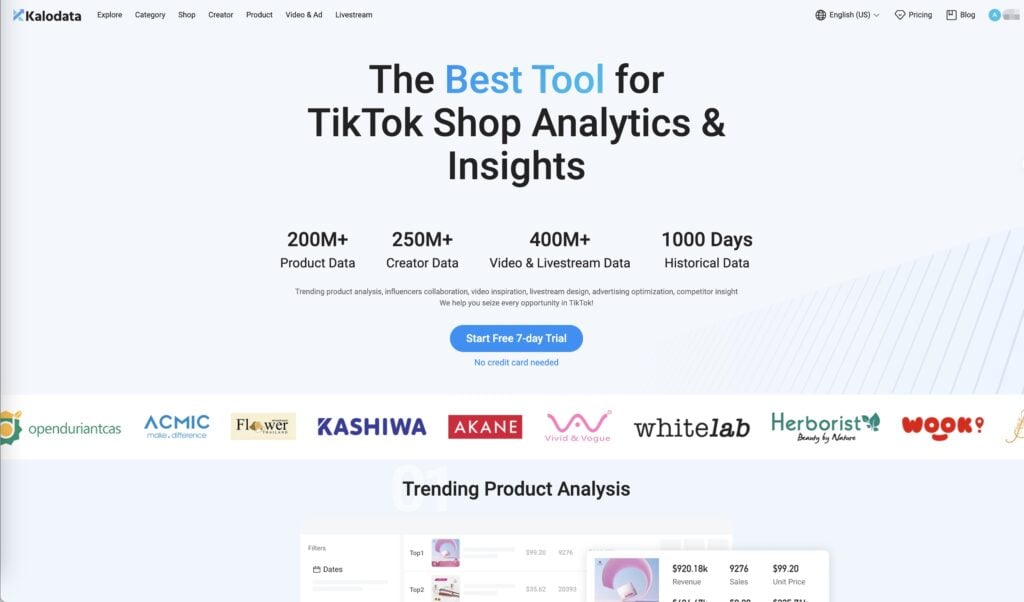
1. Kalodata: The E-commerce Specialist
As the industry standard for TikTok Shop analytics, Kalodata provides a granular look at what is actually selling. It doesn’t just track views; it tracks GMV (Gross Merchandise Value).
TL;DR Summary
- Price Range: $39 – $299+/mo
- Best For: TikTok Shop sellers & Affiliate Managers
- Pros: Real-time shop sales data, Top-selling product rankings, Influencer-to-sales mapping.
- Ease of Use: ★★★★☆
- Data Depth: ★★★★★
- Reporting Speed: ★★★★★
The Verdict: If your primary goal is to “fine-tune your strategy” for sales, Kalodata is unbeatable. It allows you to uncover the exact revenue generated by specific influencers and products.
2. Brandwatch (formerly Falcon.io)
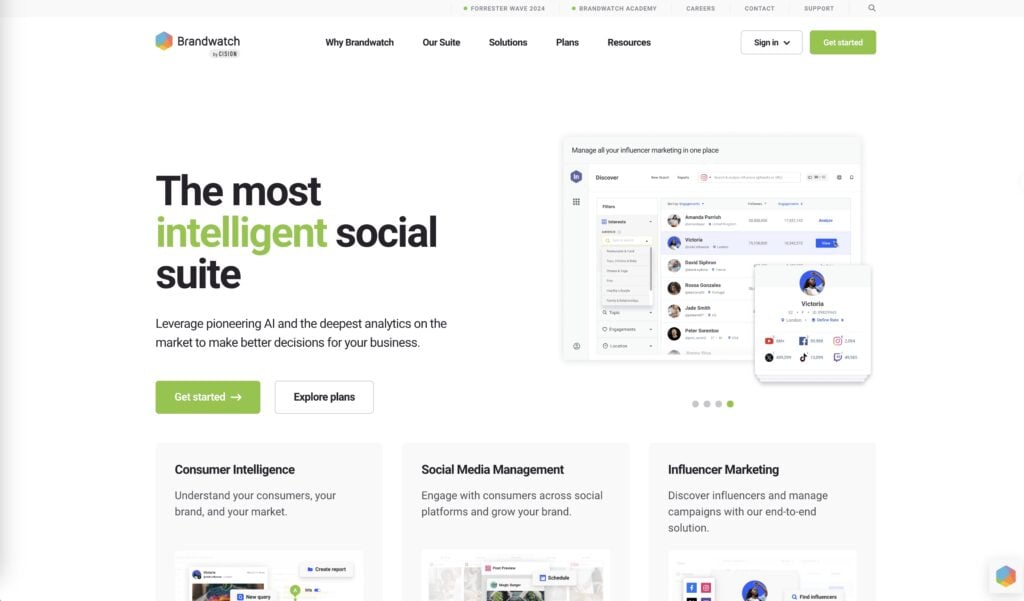
The heavyweight champion for global brands. Brandwatch excels at Sentiment Analysis—understanding not just that people are talking, but how they feel.
TL;DR Summary
- Price Range: Enterprise (Custom)
- Best For: Fortune 500 Agencies
- Pros: Advanced NLP listening, Multi-channel reporting, Competitor “vibe checks.”
- Ease of Use: ★★★☆☆
- Data Depth: ★★★★★
- Reporting Speed: ★★★★☆
The Verdict: Best for agencies needing white-label TikTok reporting for clients across multiple social platforms simultaneously.
III. Category 2: Influencer & Affiliate Analytics
3. Modash
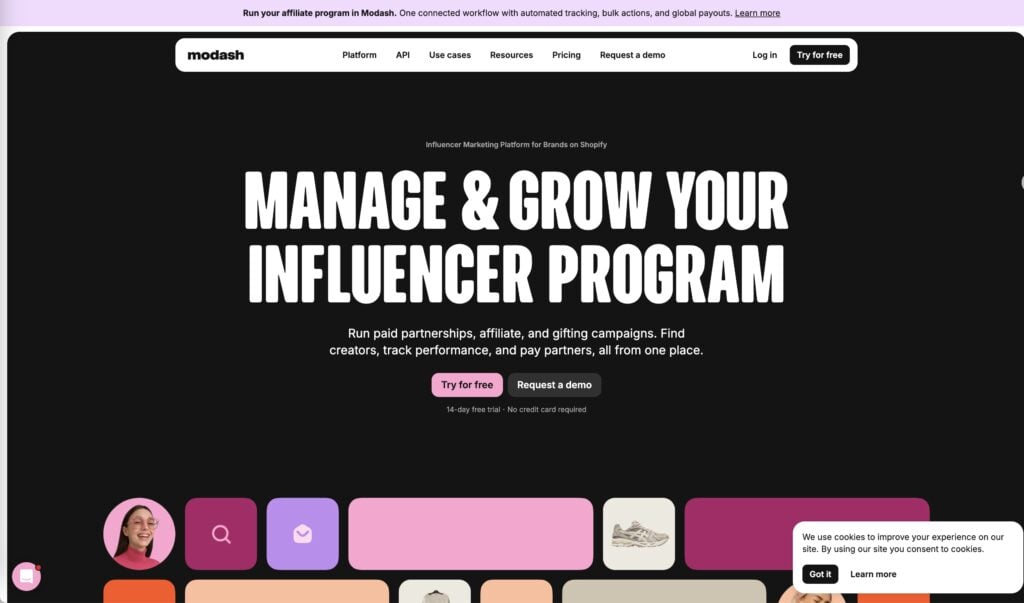
Modash is the ultimate engine for influencer discovery. With a database of over 350 million creators, it’s designed to help you “catch trends before they disappear” by finding the right voices to lead them.
TL;DR Summary
- Price Range: $199 – $500+/mo
- Best For: Scaling influencer programs
- Pros: Massive creator database, Lookalike discovery, ROI tracking.
- Ease of Use: ★★★★★
- Data Depth: ★★★★☆
- Reporting Speed: ★★★★☆
4. HypeAuditor
In 2026, bot detection is a necessity. HypeAuditor is the “Gold Standard” for TikTok influencer authenticity and fraud detection.
TL;DR Summary
- Price Range: $299+/mo
- Best For: Brands prioritizing brand safety
- Pros: 98% accurate bot detection, Audience quality scores, Historical growth audits.
- Ease of Use: ★★★★☆
- Data Depth: ★★★★★
- Reporting Speed: ★★★★☆
IV. Category 3: Emerging & Budget-Friendly Tools
5. Pentos
Pentos is built for the “Trend-First” creator. It monitors songs, hashtags, and challenges in real-time, allowing you to jump on virality before the curve plateaus.
TL;DR Summary
- Price Range: $29 – $99/mo
- Best For: Content creators & small boutiques
- Pros: Best-in-class trend tracking, Simple UI, Affordable.
- Ease of Use: ★★★★★
- Data Depth: ★★★☆☆
- Reporting Speed: ★★★★★
6. Iconosquare
A veteran in the space that has perfected the “Executive Summary” report. It’s the best tool for a solo social media manager wearing five different hats.
TL;DR Summary
- Price Range: $59 – $150/mo
- Best For: SMBs and Freelancers
- Pros: Automated PDF reports, Engagement rate (ER) benchmarks, Schedule-to-analysis workflow.
- Ease of Use: ★★★★★
- Data Depth: ★★★☆☆
- Reporting Speed: ★★★★☆
V. The “Golden Metrics”: What You Should Actually Be Tracking
Stop looking at total views. In 2026, the algorithm values retention and intent. Focus on these three metrics:
- Engagement-to-View Ratio:
$$\text{EVR} = \left( \frac{\text{Likes} + \text{Comments} + \text{Shares}}{\text{Total Views}} \right) \times 100$$
A high EVR indicates your content isn’t just being watched—it’s being absorbed. - Follower-to-Buyer Conversion: Essential for TikTok Shop. This measures the percentage of your audience that moves from your profile to a “completed checkout.”
- Audio Attribution: Tracking which trending sounds are driving your reach. Often, a specific “original sound” can be the catalyst for 80% of your monthly growth.
VI. Step-by-Step: How to Perform a TikTok Competitor Audit
To uncover audience behavior and steal market share, follow this 3-step audit:
- Identify “Content Pillars”: Use a tool like Kalodata to see which of your rival’s videos have the highest “Save” rate. Saves are the strongest indicator of a “Content Pillar” that provides value.
- Spot Engagement Spikes: Look for anomalies in their follower growth. Did they spike on a Tuesday? Check what they posted 24 hours prior. That is your blueprint.
- The “Vibe Check” (Sentiment Analysis): Read the comments using NLP tools. Are people asking about the price? Are they complaining about shipping? Use their weaknesses to frame your own marketing hooks.
VII. Technical FAQ
Do these tools access my private data?
Most reputable third-party tools use the official TikTok Business API. They only access the data you authorize and cannot see your private messages or personal login credentials.
Can I export reports to PDF or PowerPoint for clients?
Yes. Tools like Iconosquare and Brandwatch offer one-click white-label reporting, allowing you to add your agency logo and send automated weekly updates to clients.
How often does the data refresh?
Enterprise tools typically refresh every 1 to 6 hours, while budget tools may refresh once every 24 hours. For TikTok Shop sellers, real-time data (like Kalodata’s) is essential for inventory management.
VIII. Final Verdict: Which Tool Should You Choose?
- For the E-com Brand: Choose Kalodata. The ability to see GMV and creator sales performance makes it the only choice for those focused on the bottom line.
- For the Multi-Client Agency: Choose Brandwatch. The enterprise-level listening and cross-platform reporting will save your team dozens of hours every month.
- For the Solo Creator: Choose Pentos. It’s the most cost-effective way to stay ahead of the “Trend Cycle.”
Ready to stop guessing and start growing?
Download our “30-Day TikTok Growth Checklist” and start your free trial of Kalodata today. See exactly what’s working in your niche and turn your views into revenue.
How many TikTok accounts are you currently managing for your business or clients?